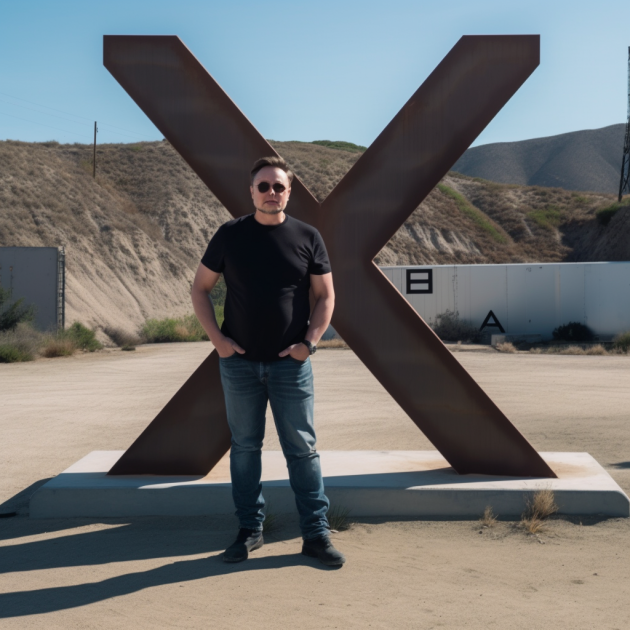
It was July 25, 2023, when Twitter’s owner, Elon Musk, explained in a post on the platform why he decided to rename Twitter to “X”. According to Musk, the acquisition by X Corp is aimed at guaranteeing freedom of expression and using Twitter as an accelerator for his “X, the app for everything” app. Musk emphasized that this change goes beyond a simple rebrand, as Twitter’s new direction is aligned with the “X” project. The name “Twitter” made sense when the platform was dedicated to short 140-character messages, but now that it’s possible to share more varied content, including videos of several hours, the name no longer fully reflects the nature of the platform. Musk concluded by saying that in the coming months complete communications and the ability to manage the financial world of users would be introduced, and that the name “Twitter” no longer makes sense in this context, so it’s time for a change.
There are various reasons why this corporate transformation disguised as a “rebrand” will never work:
Elon Musk is a very rich man, and as such he was able to “buy” Twitter users. His “X” platform would never have reached a subscription level equal to Twitter’s, not in a reasonable timeframe. So he chose to acquire them instead. Too bad that 32 million users didn’t take it very well ( https://www.theguardian.com/technology/2022/dec/13/twitter-lose-users-elon-musk-takeover-hate-speech ). More will follow.
Elon Musk has amply demonstrated that he does not aspire to freedom of speech, given that to gain visibility (at the individual account level) you need to “subscribe”. Basically, without paying, your visibility (read: your opinion) is practically wiped out. Fabulous freedom of expression!
The name “Twitter” is widely recognized and associated with the microblogging platform. Changing the name could confuse users and lead to loss of brand recognition accumulated over the years. Effectively communicating the “rebrand” to millions of users can be complicated. There could be misunderstandings or confusion about what the new name means and how it affects the platform.
Changing the name of a widely used platform requires modifying elements such as websites, applications, marketing materials and much more. This can involve significant costs. The rebrand might require technical and infrastructural changes to adapt to the new name. This could involve service disruptions or technical issues.
Changing the name of a large-scale company like Twitter would attract a lot of attention from the media and the public. This could lead to criticism, debate and speculation about the effectiveness of the move. Additionally, changing the name could raise issues related to intellectual property, such as ownership of the new name and the risk of infringement of existing registered trademarks.
The new name “X” could be ambiguous or difficult to associate with the platform, which could make it difficult to convey the nature and purpose of the platform itself. Saying that an APP can “do everything” is adolescent bragging soaked in hormones at the highest power.
The entire operation violates the most classic law of corporate “why”, forming part of the “Golden Circle” concept formulated by Simon Sinek. The basic idea is that people are more inclined to connect with and support a company or organization when they understand the deep reason (the “why”) behind its actions, rather than focusing only on what it does or how it does it. This approach aims to create an emotional bond with the audience and convey a sense of broader purpose. Simon Sinek’s statement underscores the importance of communicating the “why” behind what you do to create an emotional association with the audience. If “X” has not been clearly presented with respect to its purpose and motivation, there could be a lack of emotional connection with the audience, which could negatively impact its potential for success.
While Sinek emphasizes the importance of a deep and authentic reason as the driver of action and inspiration, Musk’s actions could reflect a variety of motivations, including financial and strategic ones. The discrepancy between Elon Musk’s statements about “freedom of expression” on X and the reality of implementation could certainly raise criticism. For example: the approach of charging for a more visible account seems to go against the idea of guaranteeing freedom of expression to all users.
In this context, it might be useful to analyze the consistency between Musk’s actions and words on X with respect to the principles and goals he has expressed. This could affect public perception and potentially have an extremely negative impact.
Final prediction: failure across the board.