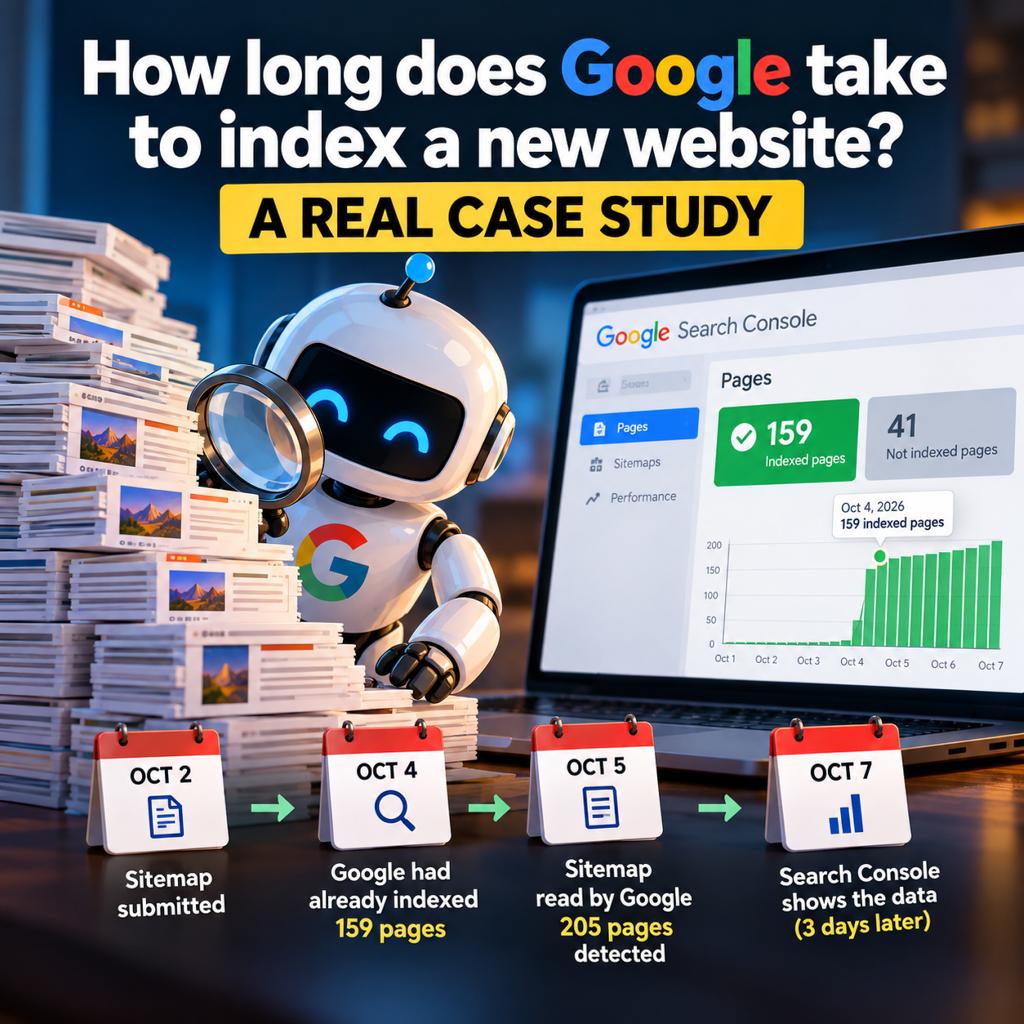
How long does Google really take to index a new website? A real case study
07/10/2026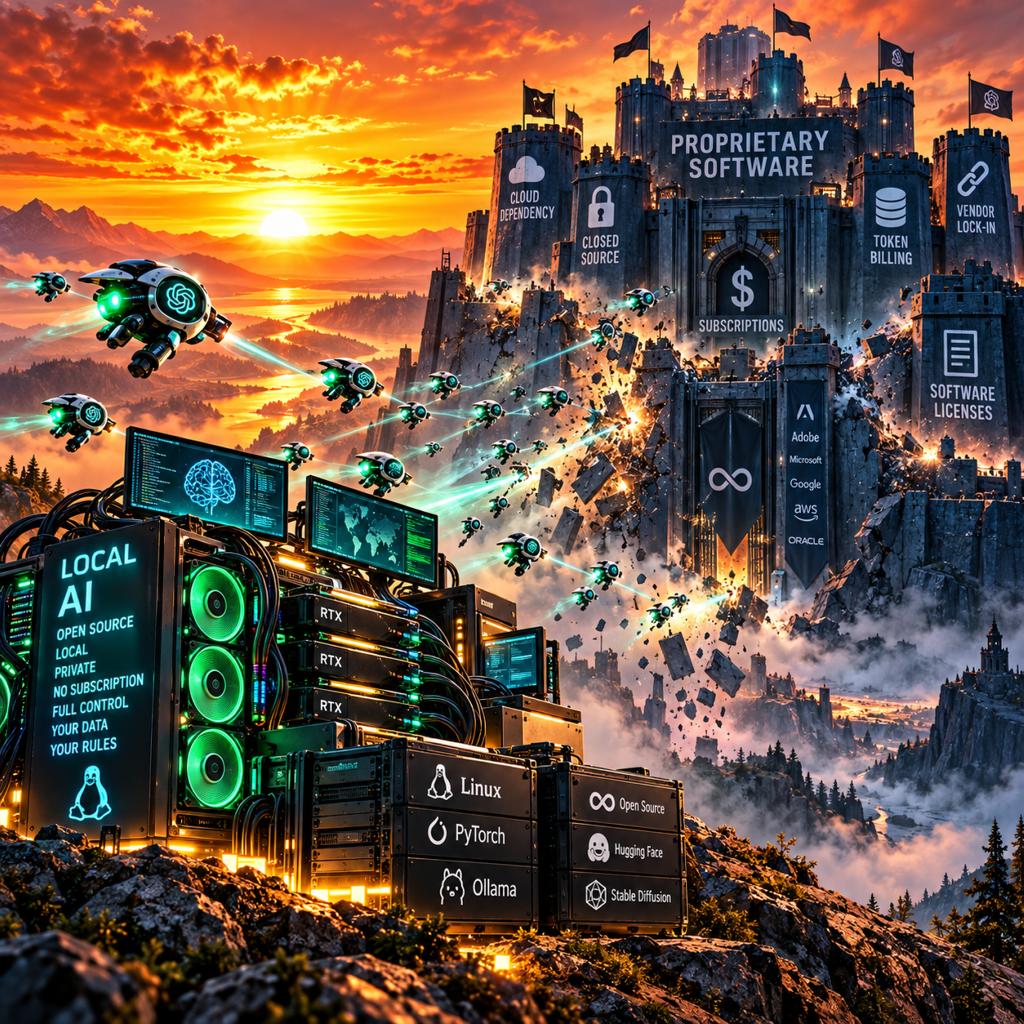
Software as we knew it is dead. Welcome to the era of Local AI and Open Source.
Adobe is just the warning sign that gets everyone’s attention. The real problem runs much deeper.
A few days ago, a developer released ArtCraft: seven open-source apps replicating Photoshop, Illustrator, Premiere, and the rest of the suite, built with the help of a generative AI model. Rough alpha versions, no doubt about it. But who actually uses 100% of Photoshop’s features? Maybe high-end professionals. Everyone else uses just a fraction of them, and alternatives like Krita were simply waiting for a major boost. Now they’ve got it.
Yes, these apps were built using a proprietary AI model. But look at where things are heading, not just where they stand today: the gap between proprietary and open models keeps shrinking.
There is a before and an after, and 2026 is the exact dividing line. Major software companies, protected for decades by closed-source code and restrictive licenses, are watching part of their competitive advantage crumble. If replicating a complex feature becomes easy, a “secret algorithm” is no longer enough to justify the price.
The perfect analogy? The automobile. In the early 1900s, it was a luxury reserved for the elite. Then came the assembly line. The focus is shifting from “how do I write the code?” to “what problem do I want to solve?” Anyone can now build their own business management software (finally!). I wouldn’t exactly call that a trivial development.
And open source? It’s accelerating like crazy: an AI agent can perform a hundred code revisions a day without getting tired. In the medium to long term, programmers will increasingly become supervisors, while updates and bug fixes could become dramatically faster. If open source used to be a thorn in the side of proprietary software, now it’s a hot knife through butter.
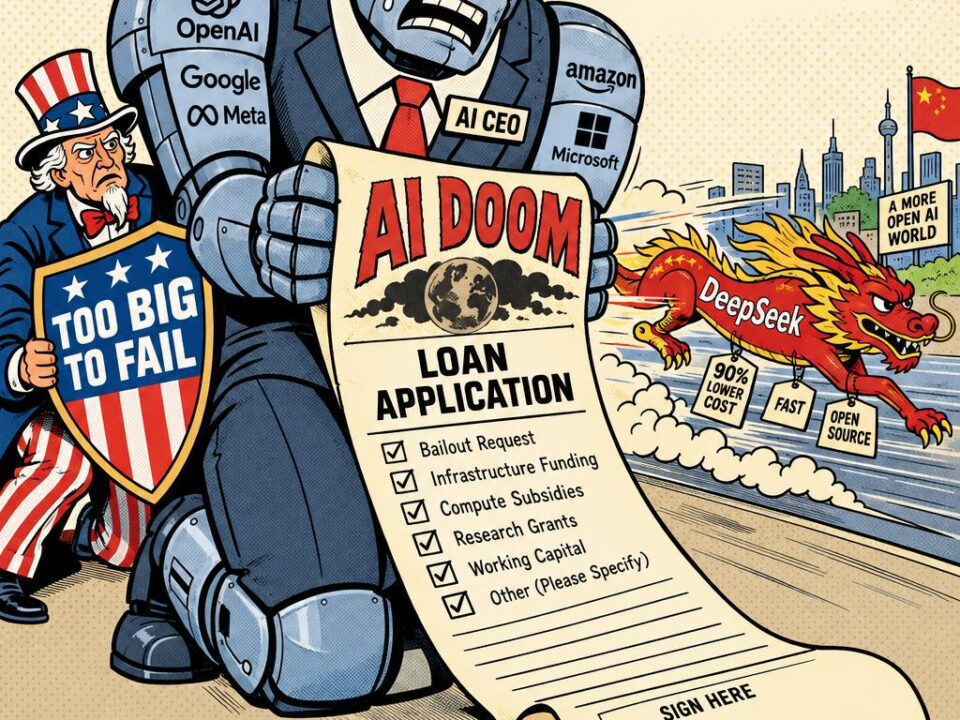
But this isn’t just about traditional software. Companies selling AI subscriptions are exposed too. Why pay for ChatGPT or Claude while accepting usage limits and per-token charges? With decent in-house infrastructure and DeepSeek V4 Pro, I get practically the same results in 90% of cases, based on my own experience.
I’ve installed it locally and seen it in action. Yes, it’s slow on my “outdated” machine, but I still use it every single day. Running AI locally gives you back control over your data and source code, eliminates per-token billing, and turns part of your recurring expenses into an infrastructure investment. It’s not free, but it completely changes the economics.
Those who survive will sell process consulting, integration, security, and governance. The value is no longer just in the tool itself, but in knowing how to apply it.
How are you reorganizing your processes and infrastructure? Are you still paying subscriptions for everything, or have you started bringing AI in-house? My advice? Start with the latter. Don’t say I didn’t warn you.