ZX Spectrum Games with Spectacular AY Audio
23/10/2026
Anthropic’s Nasdaq debut was supposed to be the crowning moment of the AI revolution, proof that the trillions of dollars bet on the future of language models were money well spent. Instead, the first day of trading told a more sober story, and a revealing one for anyone watching the industry without Silicon Valley’s rose-colored glasses. Anthropic priced its shares at $83, raising more than $81 billion in the largest IPO on record. Then came the opening rush. Shares began trading at $111.50, up 34%, pushing the company’s valuation past the psychological threshold of $2 trillion. The spell lasted only a few hours. By the closing bell, shares had fallen back to just over $97, a much more modest 17% above the offer price. Anthropic’s pricing announcement · Nasdaq’s opening report
Let’s do the math. To earn a 20% return on the $1 trillion in computing and data center commitments it has already signed, Anthropic would need roughly $602 billion in annual revenue. That’s more than giants like Apple or Alphabet bring in today and nearly nine times Anthropic’s current run rate.
The end of Silicon Valley’s blank checks
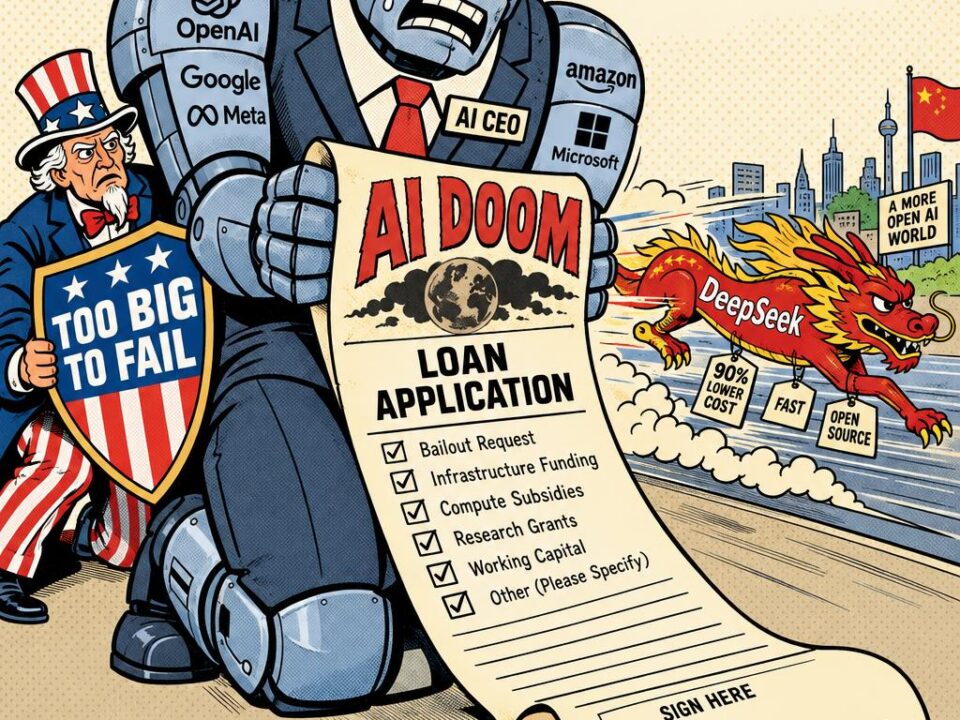
The fact that the opening gain was cut in half in a single session is the clearest sign that public investors have little appetite for the blank checks Silicon Valley venture capitalists have been willing to write. For years we’ve watched the same cloud and semiconductor giants pour tens of billions into startups like Anthropic at valuations that doubled every quarter, knowing full well that those billions would flow back to them as payments for server rentals and GPUs. It’s easy to inflate a balloon when the same four people in the same room keep blowing into it. Throw it out the window into the open arena of Wall Street, though, and gravity reasserts itself with brutal arithmetic.
The economics of AI: the more it grows, the more it costs
A look at the fine print of the prospectus helps explain why institutional investors hit the brakes once the initial excitement wore off. Revenue was growing fast, but Anthropic’s computing and infrastructure costs rose 77% to nearly $10 billion in a single quarter, outpacing revenue growth. That’s the structural paradox of the business model. As more people and companies use massive proprietary models, the bills for power and compute balloon. Betting on a market capitalization above $1.3 trillion for a company burning capital at this rate takes a leap of faith that its margins will somehow turn around.
DeepSeek, Ollama and open source: a giant with feet of clay
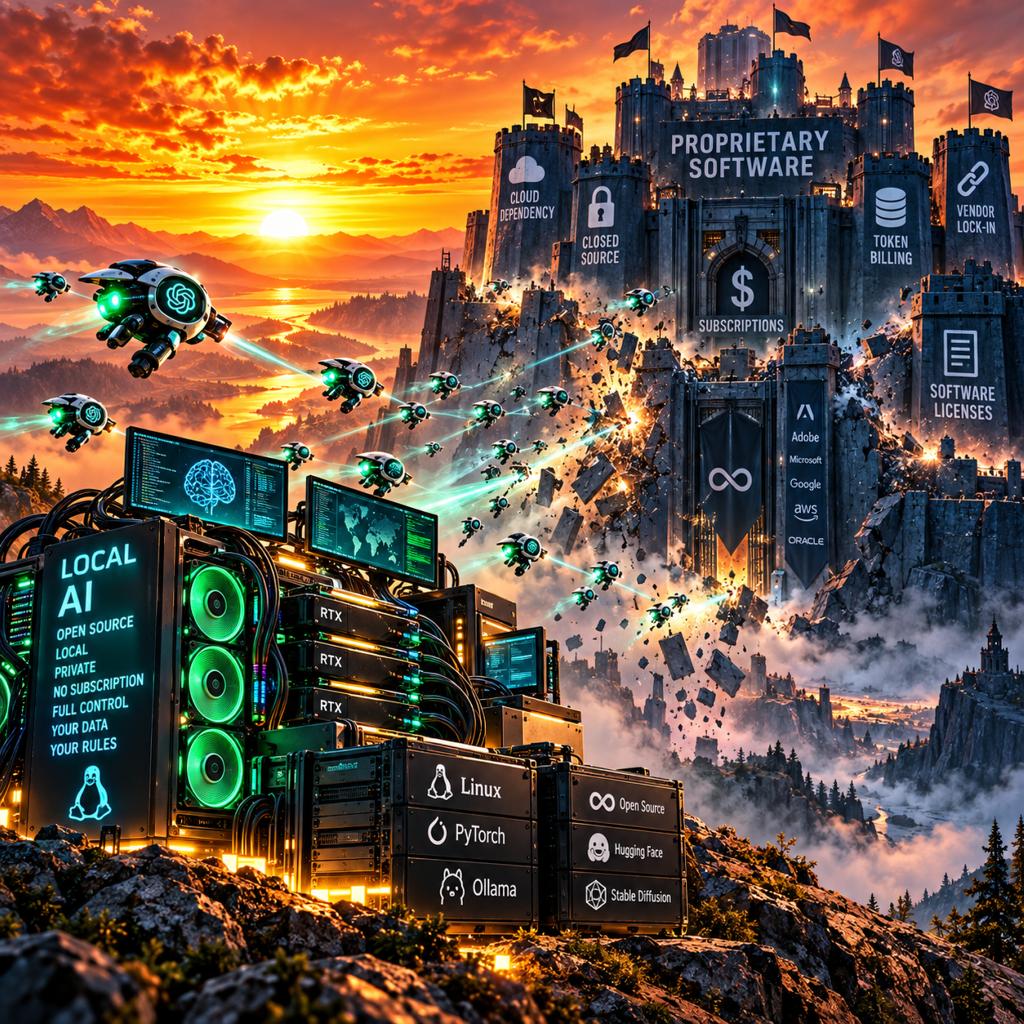
The story looks even shakier when you consider how quickly the technological moat around these giants is drying up. While San Francisco burns through tens of billions training ever larger and more power-hungry models, open source and efficient architectures have already given the game away. Leaner alternatives like DeepSeek and tools like Ollama, which let people run models on their own hardware, show that most real-world applications don’t need a nuclear power plant to get excellent results. Meanwhile, the effective market price of tokens fell more than 40% in a few months, making it even harder to turn enterprise adoption into lasting net profits.
Centralized cloud vs. local AI: the value of independence
The market is also beginning to price in another structural weakness of the centralized model: the fragility that comes with relying on a handful of giant cloud providers for everything. Every time a major service goes down, entire chains of operations grind to a halt, showing the risk of giving up control of your own infrastructure. The sensible response to that vulnerability is to reclaim local control with self-hosted architectures and models that run on your own hardware, where costs are predictable and data stays under your control. The latest enterprise subscription at hundreds of dollars a month offers little help on that front.
Artificial intelligence can’t replace expertise
Then there’s the gulf between the sales pitch and everyday use. To justify astronomical valuations, Big Tech keeps selling AI as a magic wand that can replace entire departments with a click. In practice, AI can make people ten or twenty times more productive, but only when they already have a solid grasp of the technology and its architecture. A conductor needs to know how to play an instrument before leading an orchestra. Without an experienced professional guiding the process, automated generation produces bloated code, technical debt and, to put it plainly, pure artificial stupidity.
The emperor has no clothes: the technology endures, the bubble wobbles
Anthropic’s lukewarm 17% Nasdaq gain is the moment the emperor’s clothes started to disappear. The technology itself remains a powerful tool that will change how we work and build software. The financial structure built around centralized proprietary models, however, has grown to an unsustainable scale. With operating costs spiraling, leaner competitors squeezing margins and valuations detached from economic fundamentals, Wall Street has sent a clear message. The party of limitless multiples is over, and fewer people are willing to pay for the next blind bet.