On 11 January 2026, Walmart and Google confirmed that shoppers will be able to find and buy items from Walmart and Sam’s Club through Gemini, Google’s AI assistant. The announcement came at NRF’s Big Show at Manhattan’s Javits Center, and it was framed as something larger than a storefront integration.
A standard dressed as a partnership
Sundar Pichai, chief executive of Google and Alphabet, used the occasion to introduce the Universal Commerce Protocol, or UCP, an open standard he said was built with foundation partners Shopify, Etsy, Wayfair, Target and Walmart, and shaped by more than 20 global advisers. Pichai presented it as a response to a structural problem: the industry, he argued, needs a protocol that works on a global scale and takes into account the nuances of the e-commerce journey, transforming fragmented search, commerce and service touch points into a seamless customer journey.
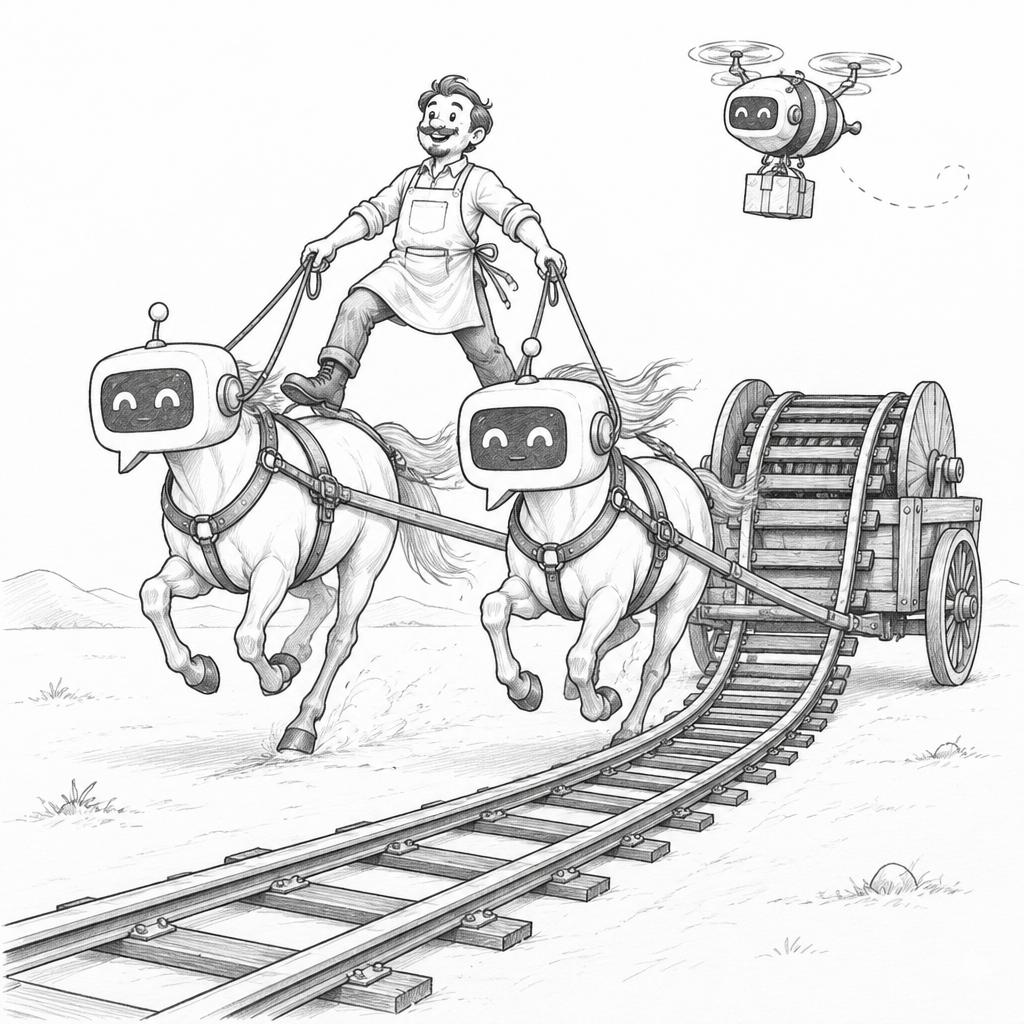
That is the analytical core of the deal. Walmart is not simply buying distribution inside a chatbot; it is co-signing the rails on which agent-led commerce will run. Pichai’s own explanation of why a second protocol was needed, given that Walmart had already partnered with ChatGPT, is telling: the contest is no longer about which assistant answers questions, but about which set of rules governs the transaction.
From keywords to conversation
The consumer-facing change is deliberately modest to describe and radical to operate. Instead of typing keywords and scrolling through pages of results, a shopper holds a conversation. Pichai described the experience as a conversational and knowledgeable sales associate that answers questions and offers proactive recommendations. Ask Gemini what gear is needed for a spring camping trip and it surfaces relevant items from Walmart and Sam’s Club; continue the conversation and it narrows further.
Personalisation supplies the second layer. When customers link their Walmart accounts, Gemini can draw on previous purchases, combine new picks with items already bought, and apply Walmart+ or Sam’s Club membership perks to the purchase. Delivery is the third promise: hundreds of thousands of products available, all potentially deliverable in under three hours and as fast as 30 minutes.
The drone arithmetic
The two executives also extended a quieter piece of the relationship. Wing, Alphabet’s drone delivery service, is expanding to an additional 150 sites for a total of 270, giving 40 million people access. Pichai offered the retention figure — roughly 50 percent of people who use the service use it again — and the speed curve: half of deliveries in 20 minutes or less, the fastest around six minutes. Furner was candid about the friction, citing regulations, the weight of the aircraft and the load, and speed. The expanded footprint runs coast to coast, from Los Angeles to Miami.
Why Walmart hedges
Read the timing as strategy rather than enthusiasm. Google, Amazon and OpenAI are competing for leadership in AI, and Walmart is placing its catalogue across multiple assistants, having struck a similar arrangement with OpenAI in October. Its own agent portfolio, including Sparky for shoppers, an agent for associates, a partner agent for sellers and suppliers, and one for developers, points in the same direction. Furner’s summary — that Walmart is writing the retail playbook and trying to close the gap between I want it, and I have it — is a statement about control of the moment of intent, not about checkout convenience.
The verdict
The deal is best understood as an infrastructure play wearing a shopping-assistant costume. Walmart gets reach inside Gemini and a seat at the table where UCP is defined; Google gets anchor inventory and a retailer of scale to legitimise its standard. Both sides gain the ability to claim they are driving the shift rather than watching it. But the genuinely contested asset is the layer where a customer’s request becomes a transaction, and whoever standardises that layer sets the terms for everyone else who wants to sell there. On that question, the 11 January announcement is a claim staked, not a result delivered.
Pichai’s insistence that Google is investing more resources in the safety and security of AI than in any technology before it is aimed at exactly that anxiety, particularly among enterprise partners. Whether an open protocol can hold that line while three rivals race for the same interface is the question the next year of agentic commerce will answer.