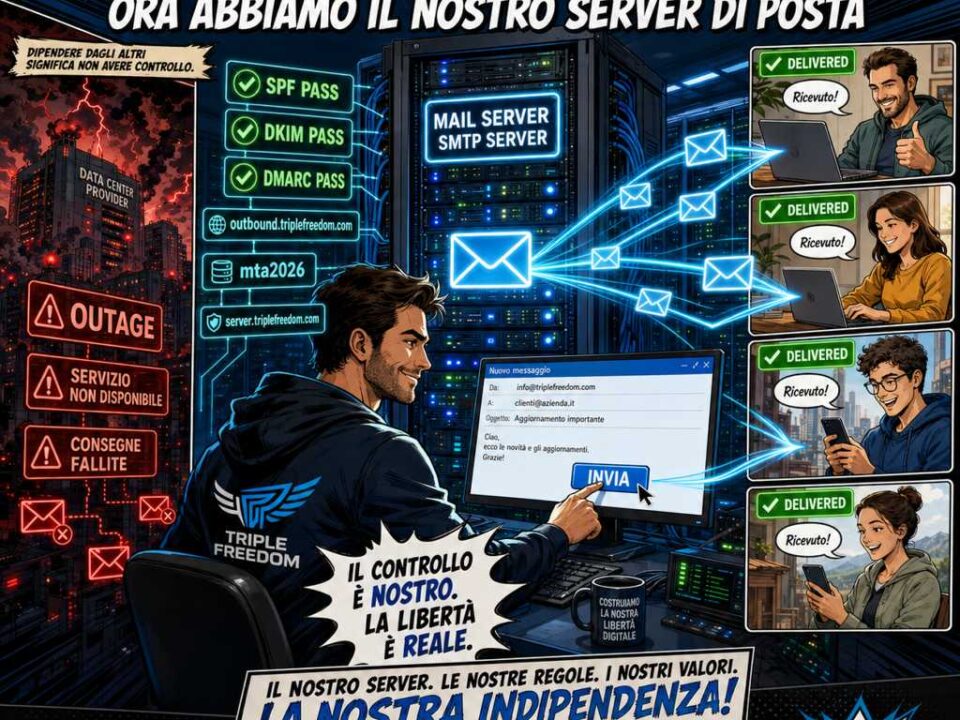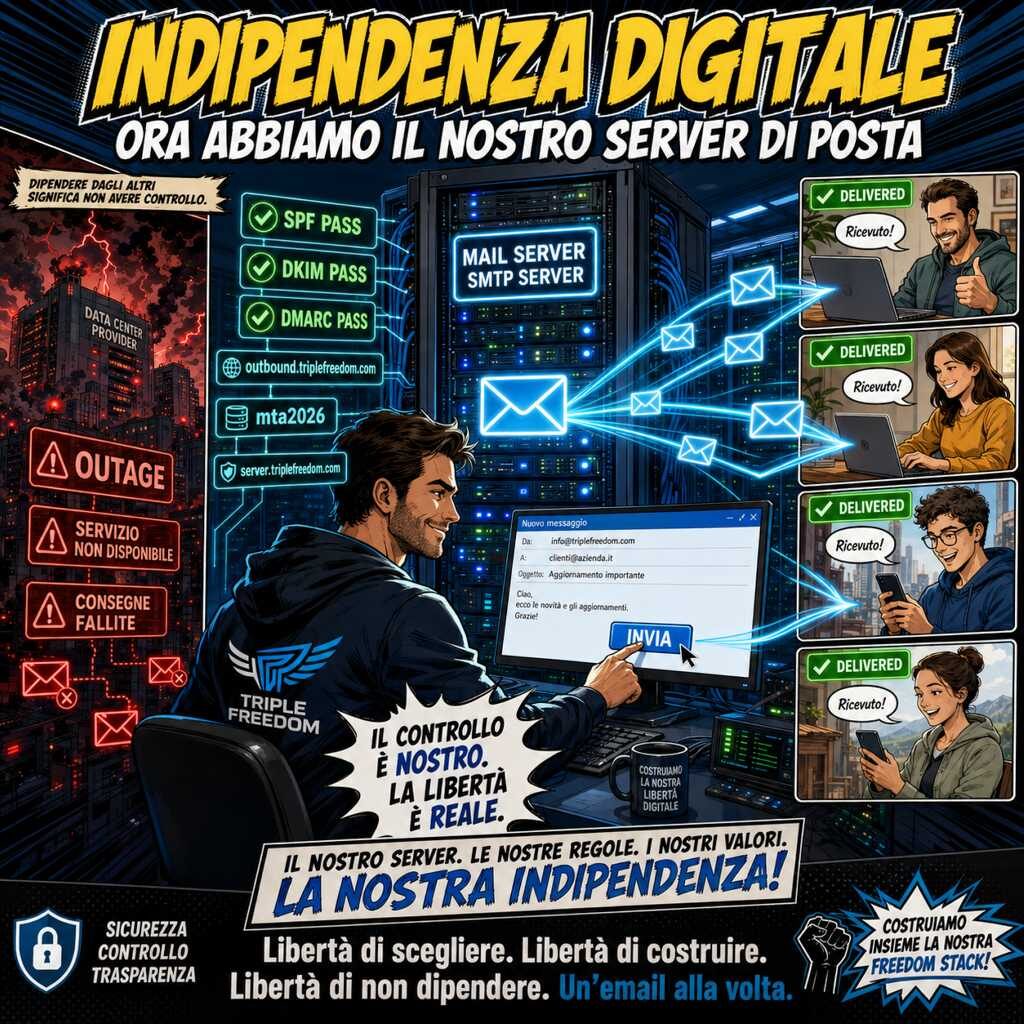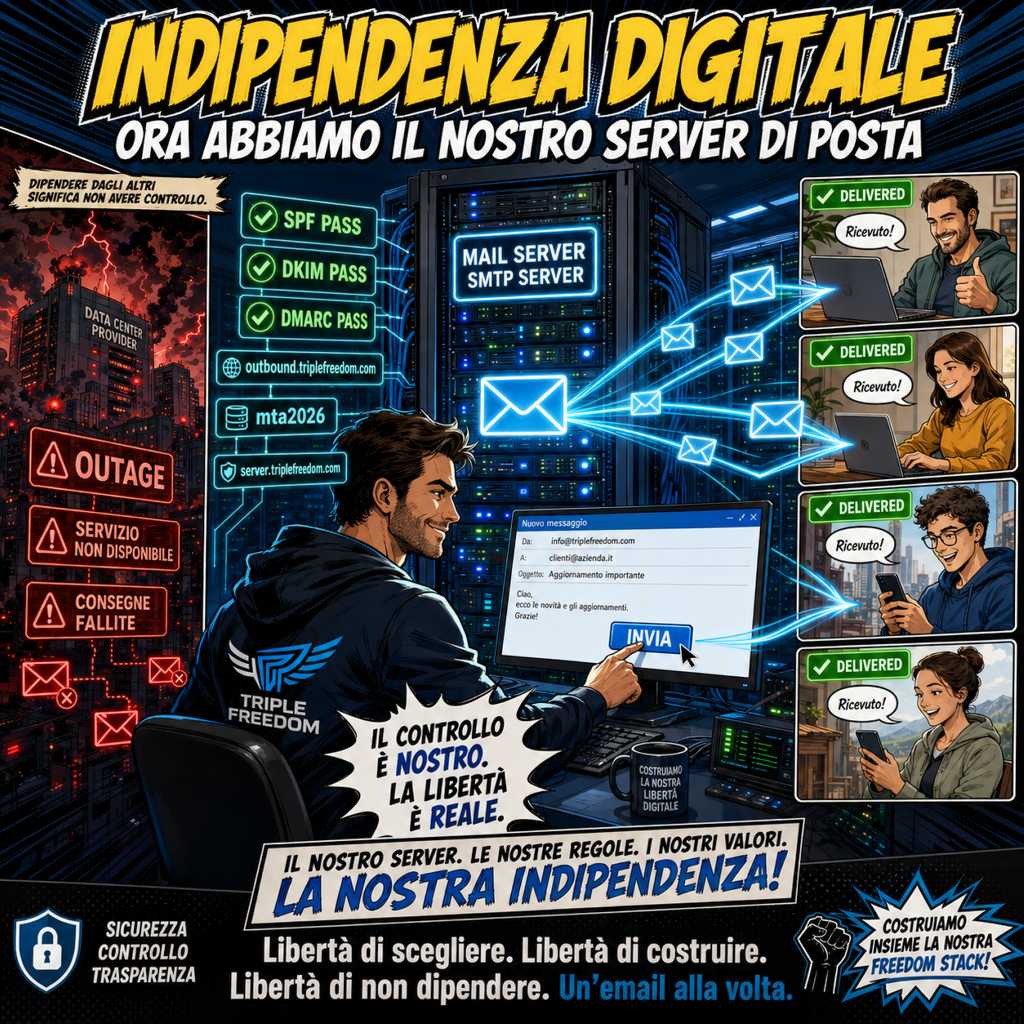
Digital Independence: now we have our own mail server
13/05/2026
Is AI THAT dangerous? Perfect, I’ll buy it.
16/09/2026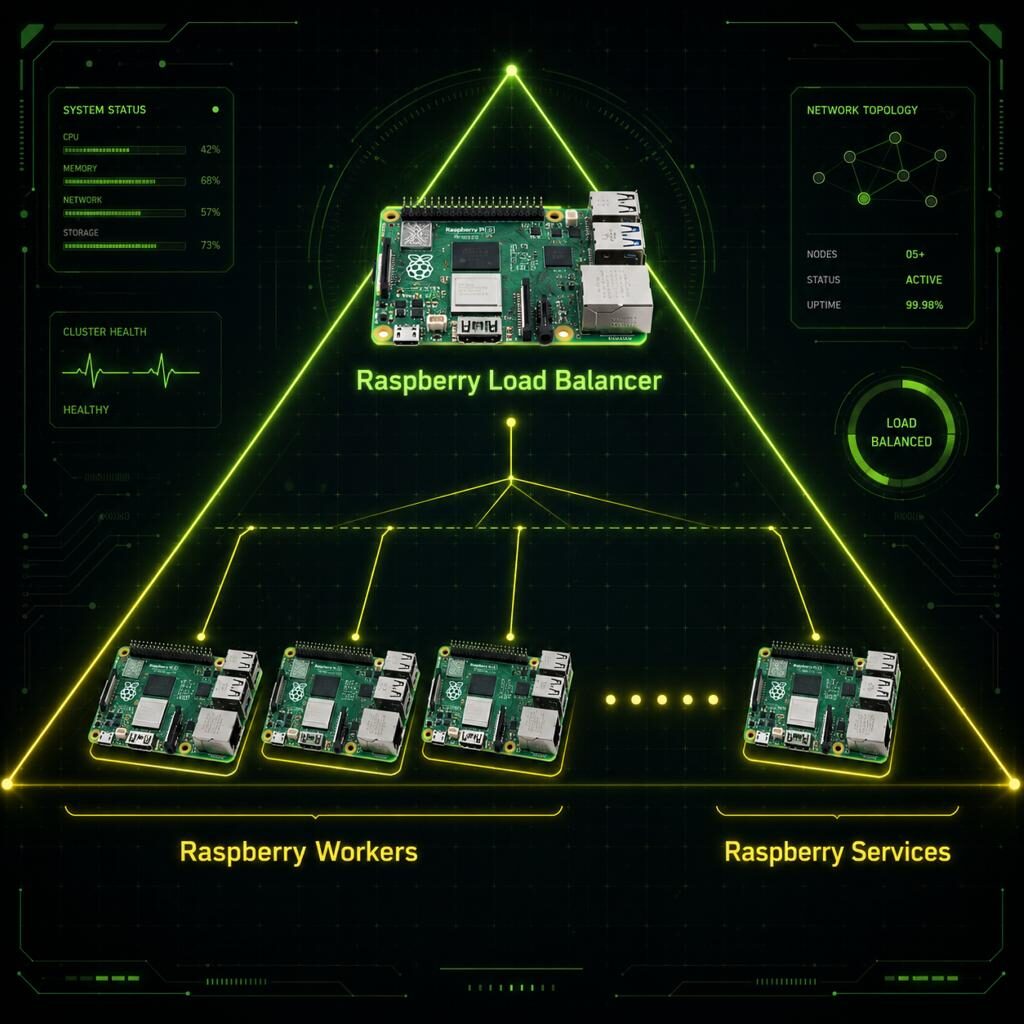
There’s a precise moment when you stop using technology and begin to truly own it. For us that moment came when we powered on the last node of the cluster, watched all the LEDs blink in unison and realized something simple: all our sites and our clients’ sites, our mail, our services run on our own hardware, in our own home, under our total control.
And it all runs on a handful of Raspberry Pis.
What a web farm is (explained properly)
Imagine a small, close-knit team instead of a single hero doing everything alone. A web farm is exactly this: several machines that split the tasks and cover each other’s backs. One node acts as the “orchestra conductor” and routes incoming traffic; the others work behind the scenes serving the sites, handling the data and taking care of the services.
The beauty is that no machine is indispensable. If one stops, the work goes on. If more power is needed, you add a node and off you go. It’s an infrastructure that breathes.
Why Raspberry Pis specifically
Here comes the part we enjoy most. People picture servers as roaring cabinets in a refrigerated room. We have something that sits comfortably on a shelf, draws as much power as a light bulb and makes no more noise than the fridge.
Raspberry Pis are the perfect choice for several reasons, all of them good:
-
Ridiculously low power consumption. The entire cluster draws less than a single traditional desktop PC. You can keep it running 24 hours a day, 365 days a year, without feeling it on the bill.
-
Negligible entry cost. Want to grow the farm? Add a board, not a server costing thousands of euros.
-
Absolute silence. No fans, no whirring. They work and no one notices.
-
Minimal footprint. The whole set fits in a space smaller than a shoebox.