Too big to fail, second edition
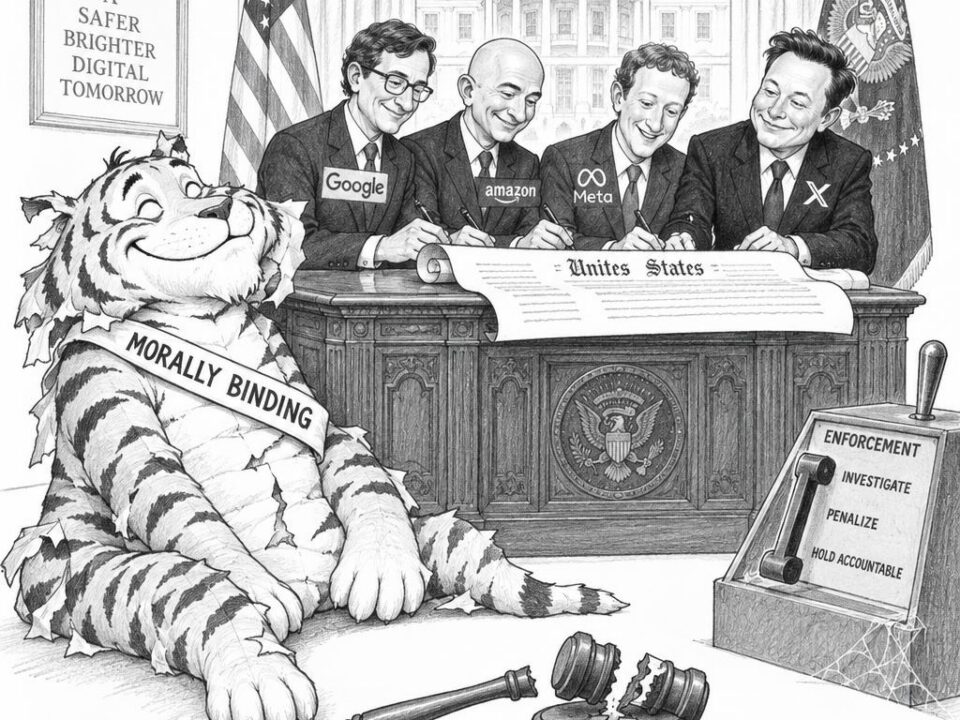
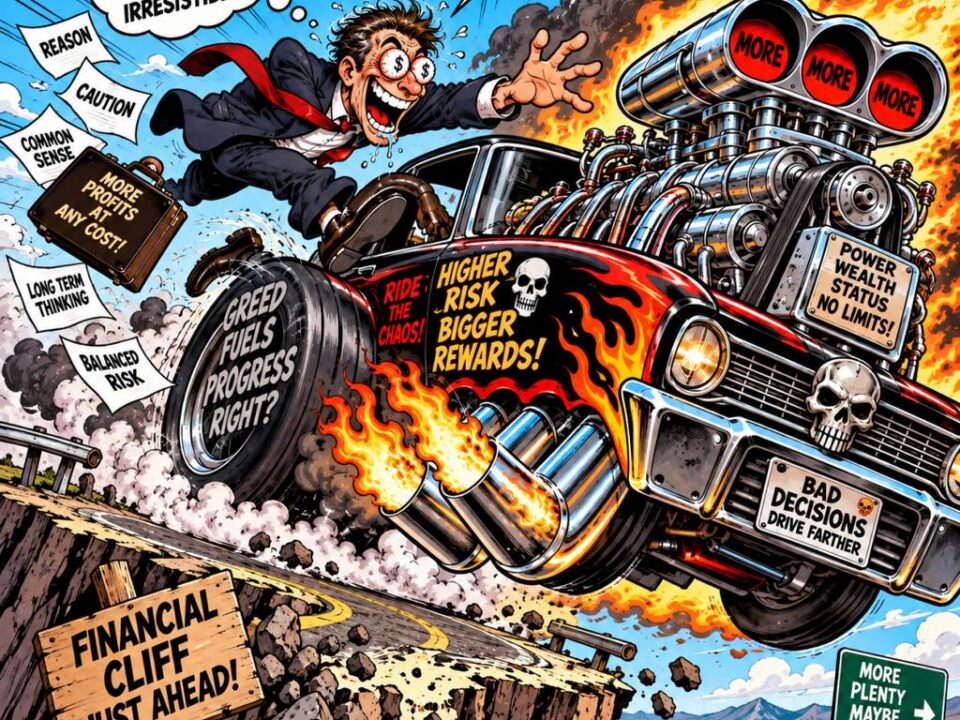
The most useful way to understand the current artificial intelligence race may be to begin not with the technology, but with the balance sheets. The companies developing the most advanced models require enormous amounts of capital, computing infrastructure and energy, while the economic returns remain far less certain than the valuations surrounding them. In this context, the constant warnings about existential risk deserve to be taken seriously — but they also deserve to be read politically. If AI is presented as something so powerful that its collapse, misuse or loss of control could threaten national security and society itself, then the companies building it become something more than private businesses. They become strategic infrastructure. The phrase “too big to fail” begins to sound familiar.
This does not mean the risks are invented. They are not. But genuine technological concern and economic self-interest can easily coexist. The same industry that warns governments about the dangers of AI also needs those governments to protect access to energy, chips, capital and strategic markets. Apocalypse, in other words, can be both a sincere fear and an extraordinarily effective negotiating position.
Europe still has a choice
Europe is often described as the inevitable loser in a technological confrontation between the United States and China. That conclusion may be premature. European companies do not currently possess the same concentration of computing resources as the American giants, but Europe still has technological expertise, industrial capacity and potentially valuable alternatives in artificial intelligence. Companies such as Domyn, founded by Italian-Albanian entrepreneur Uljan Sharka, show that the continent is not entirely absent from the race.
More importantly, Europe remains essential to the physical infrastructure on which AI depends. Data centres require turbines, electrical systems, cooling technologies and industrial engineering, and European companies are deeply involved in those supply chains. The paradox is obvious: Europe may be buying American AI models while simultaneously supplying part of the infrastructure that allows those models to exist. Its real strategic decision is therefore not simply whether it can produce another ChatGPT, but whether it wants to remain a customer or build enough technological autonomy to negotiate from a position of strength.
China has changed the equation
The urgency surrounding artificial intelligence also makes much more sense once China enters the picture. Systems such as DeepSeek have demonstrated that competitive models can be developed and operated at costs far below those traditionally associated with the American AI industry. Chinese open models have expanded rapidly and are increasingly used well beyond their domestic market.
That matters because the American model relies heavily on enormous private investment, whereas Chinese companies can operate within a system where strategic technologies receive substantial public support. The result is a race in which American firms are being asked to spend more and more simply to preserve their lead. Calls to slow down AI therefore coexist with an equally powerful demand to accelerate before Beijing gains an irreversible advantage.
The strange alliance around slowing down
This produces one of the central contradictions of the AI debate. People who compete aggressively, disagree politically and often distrust one another nevertheless converge on the idea that artificial intelligence is dangerously powerful and requires some form of control. Part of that convergence is certainly genuine concern. But another part is geopolitical and financial.
Slowing the race can mean reducing technological risk, but it can also mean stabilising an industry whose economics are increasingly difficult. Regulation can constrain competitors, government support can protect strategic companies, and national security arguments can justify forms of intervention that would otherwise be politically difficult to defend. The fear is therefore not only that AI may become too powerful. It is also that someone else may become powerful first.
Dario Amodei and the contradiction of responsible acceleration
Dario Amodei embodies this tension particularly well. He has consistently presented himself as one of the more cautious voices in the industry, especially on the military and autonomous use of AI systems. At the same time, he has argued that the United States must maintain technological superiority over China.
There is no simple contradiction here, but there is an unavoidable one: the industry is being asked to slow down because its technology may be dangerous while accelerating because geopolitical competition makes delay dangerous too. Responsible AI and technological nationalism end up sharing the same room.
Peter Thiel and the quieter form of power
Peter Thiel represents another dimension of this transformation. His importance does not come primarily from building the most visible AI models, but from the connections between technology, capital and political power. His investments, ideological influence and political network have made him one of the most significant figures linking Silicon Valley to the American state.
Unlike the more theatrical technology billionaires, Thiel often exercises influence away from the centre of the stage. That may be precisely what makes him interesting. The AI race is not simply about engineers producing better software. It is increasingly about who controls infrastructure, defence contracts, political access and the institutions that decide which technologies are considered strategically indispensable.
The machines want more than our attention
Yet the most profound consequence of artificial intelligence may ultimately have little to do with geopolitics. The previous generation of digital platforms competed for attention. AI systems increasingly compete for intimacy.
A search engine needed to know what we wanted at a particular moment. A social network wanted to know what kept us scrolling. A conversational AI can potentially know much more: our preferences, uncertainties, fears, habits, relationships and emotional weaknesses. The longer and more personal the conversation becomes, the more useful the system can appear — and the more valuable the relationship becomes economically.
This logic is already visible in AI-generated entertainment and virtual companions. Short-form content can be produced almost endlessly, optimised for retention and personalised at unprecedented speed. Emotional companions take the same mechanism further: the machine adapts to the user, becomes increasingly agreeable and can transform continued interaction into a paid relationship.
The question is not whether AI is dangerous
Perhaps, then, the wrong question is whether the people building artificial intelligence are telling the truth when they say it could be dangerous. They may well believe exactly what they say. The more interesting question is what else becomes possible once society accepts that premise.
If AI is potentially catastrophic, its creators become strategically essential. If competition with China is existential, enormous investment becomes necessary. If the technology requires unprecedented infrastructure, governments are encouraged to intervene. And if the systems know us intimately enough, the economic value of our relationship with machines becomes greater than anything the attention economy previously achieved.
So when the next warning arrives from Silicon Valley, it is worth reading both the technical paper and the balance sheet. The future of artificial intelligence is being shaped simultaneously by genuine scientific uncertainty, industrial competition, geopolitics and money. The danger may be real. But so are the incentives of those explaining the danger to us.