RIVELA is born for Visibility on AI
03/11/2025
Digital Independence: now we have our own mail server
13/05/2026
In recent months many clients – and some colleagues too – have asked us: “But is SEO collapsing everywhere because of AI?”
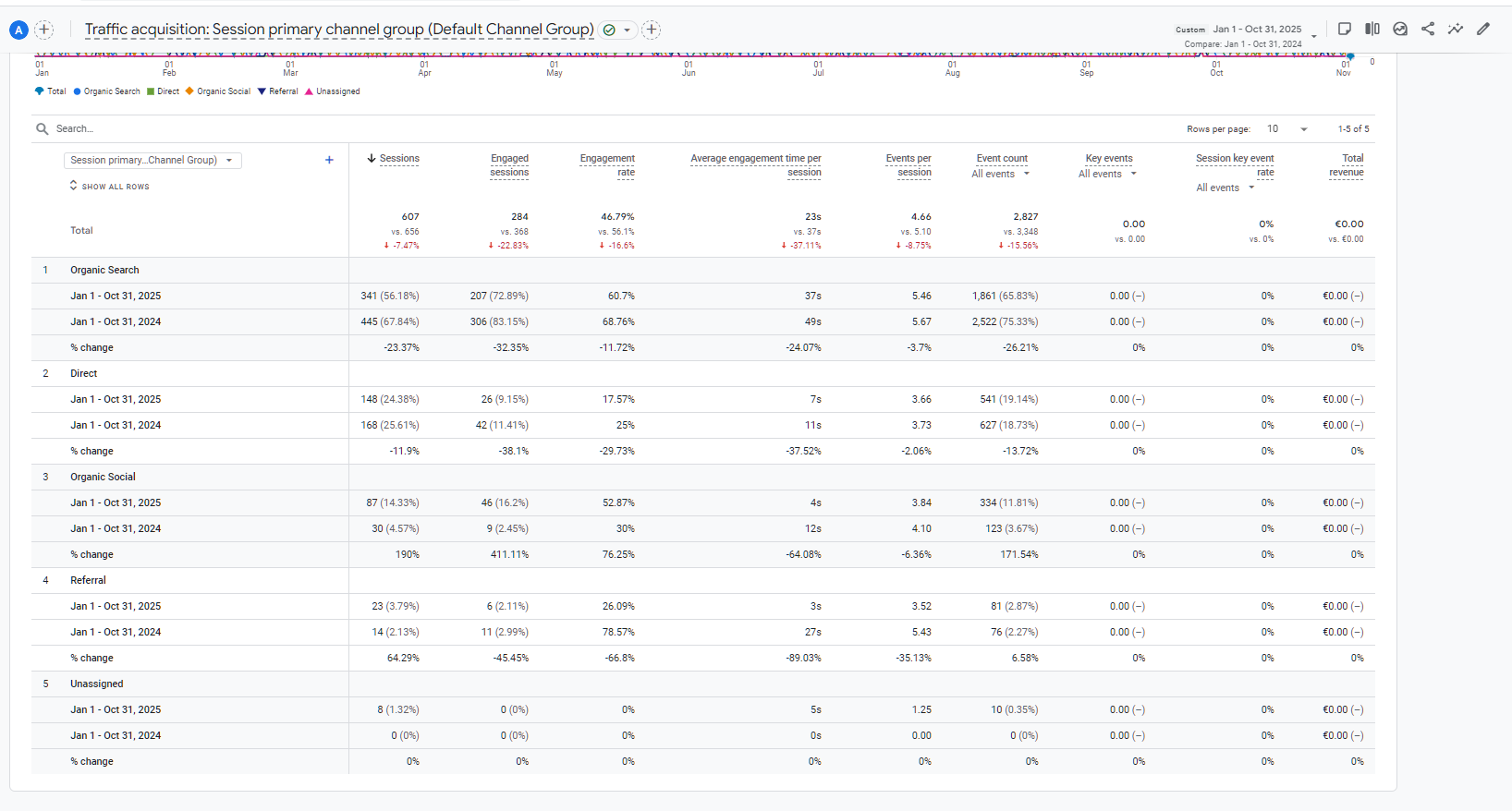
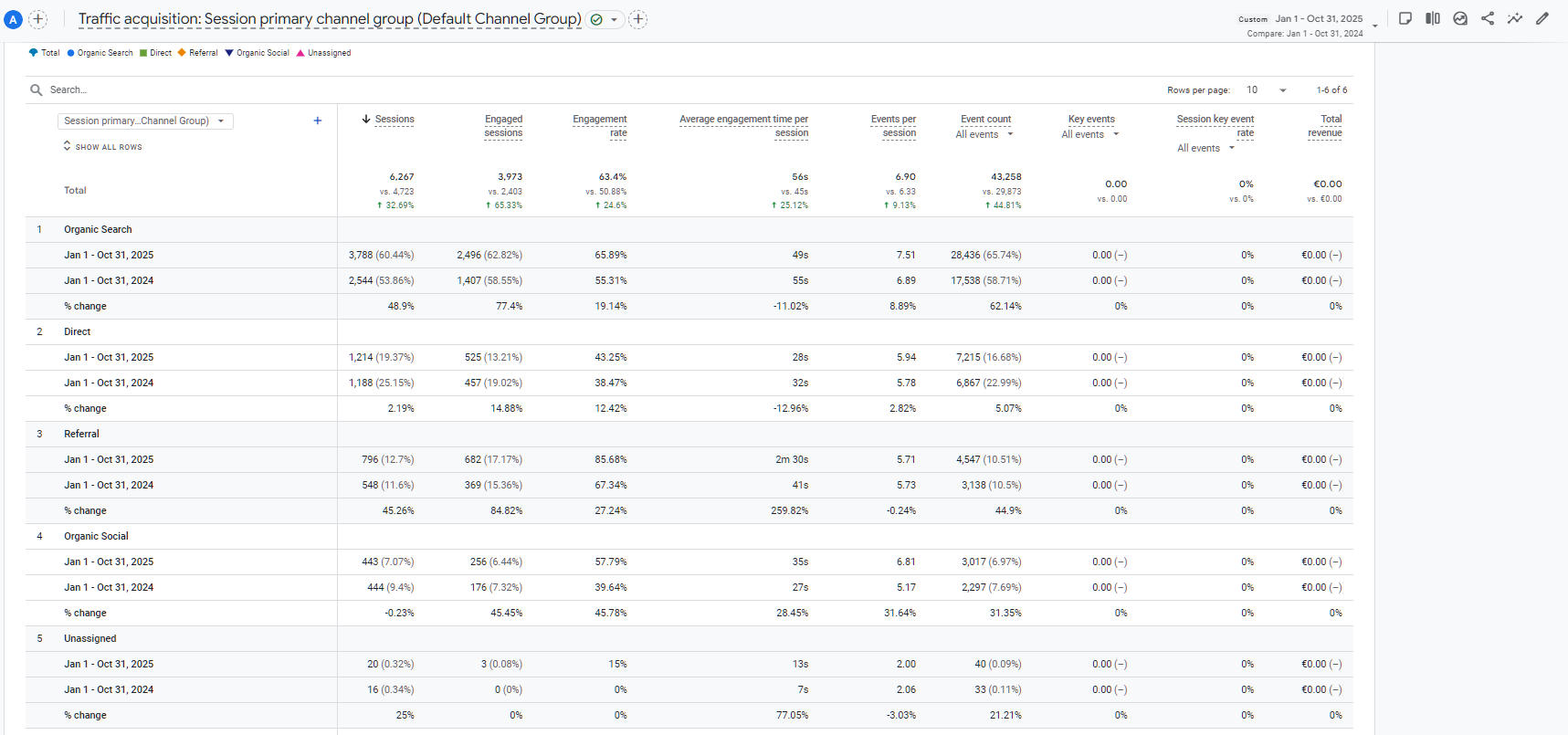
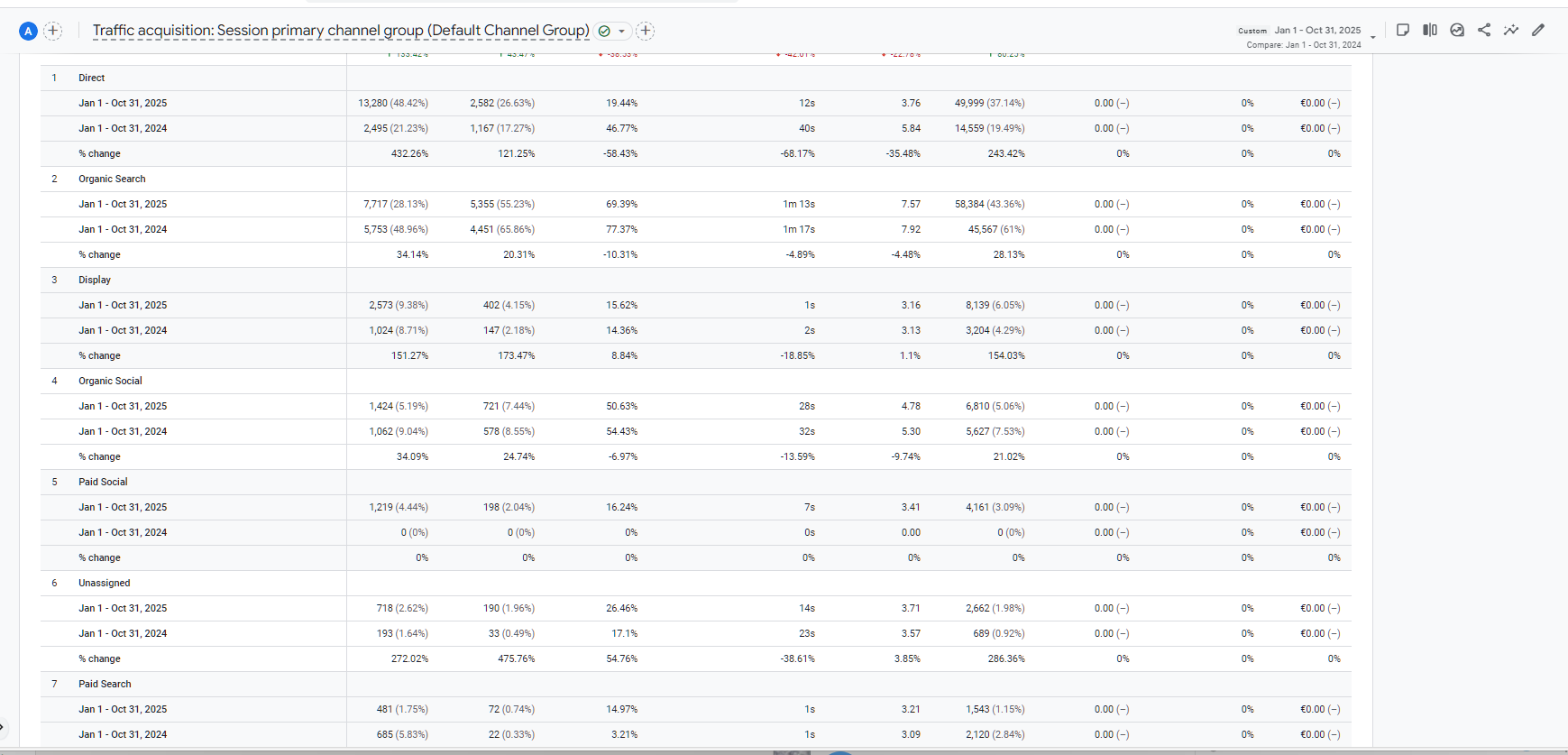
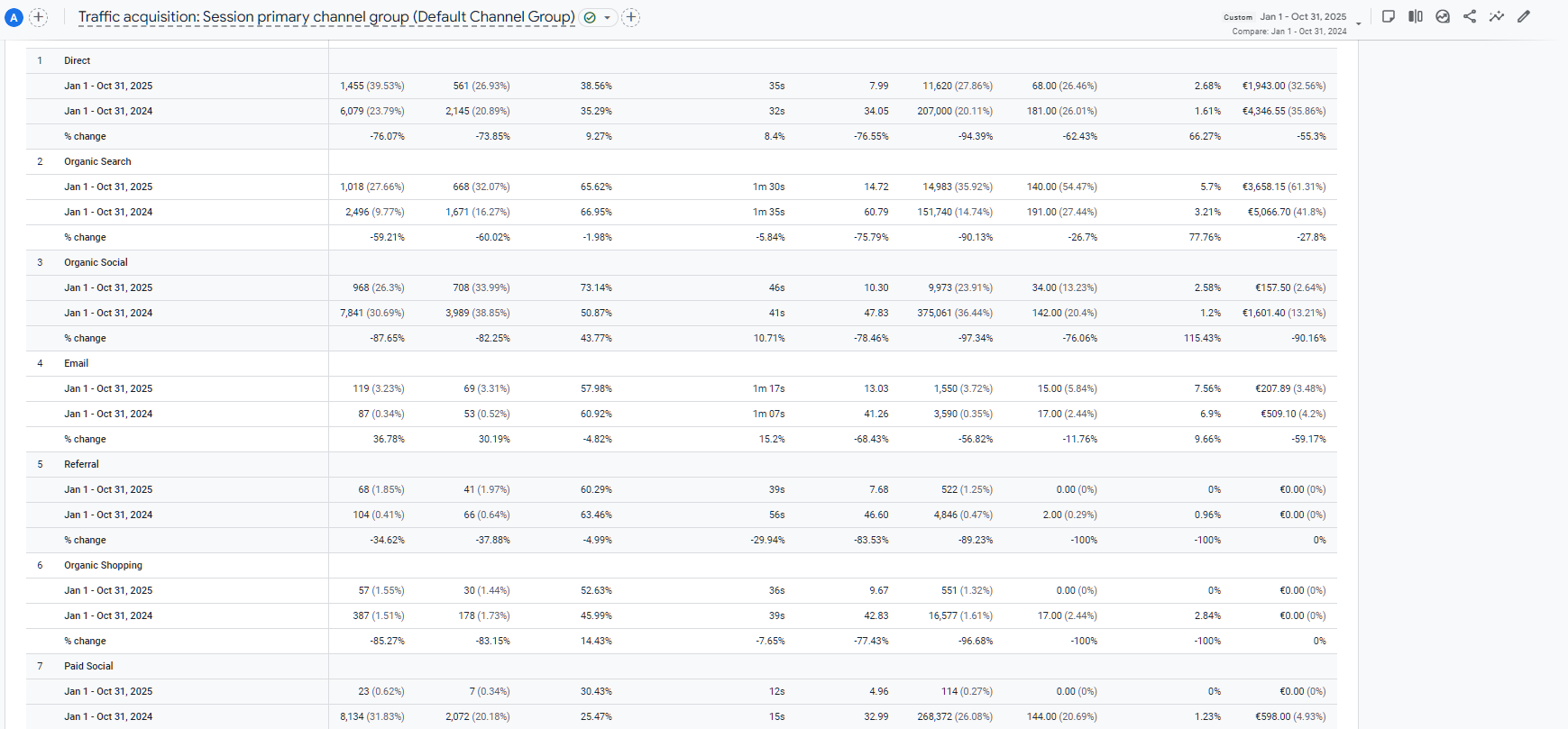
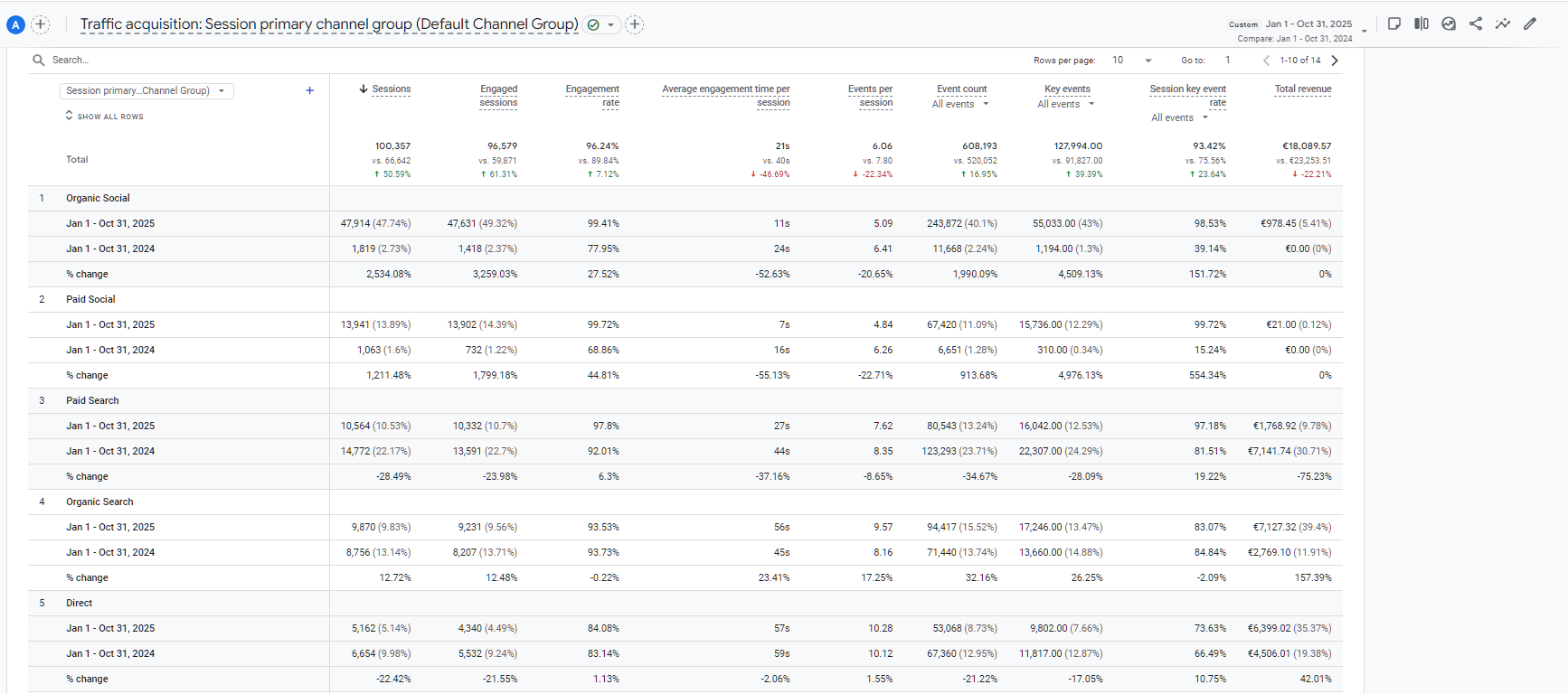
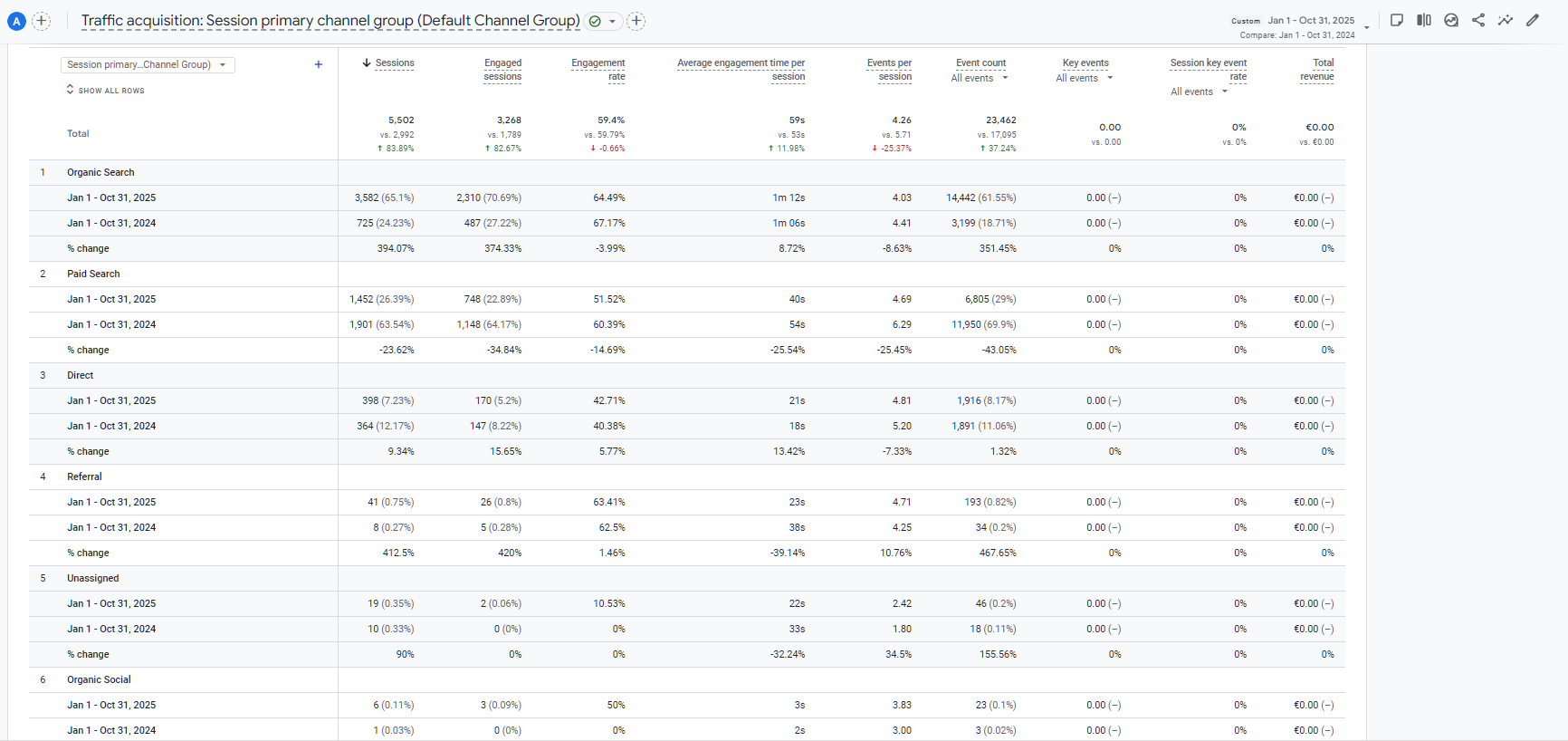
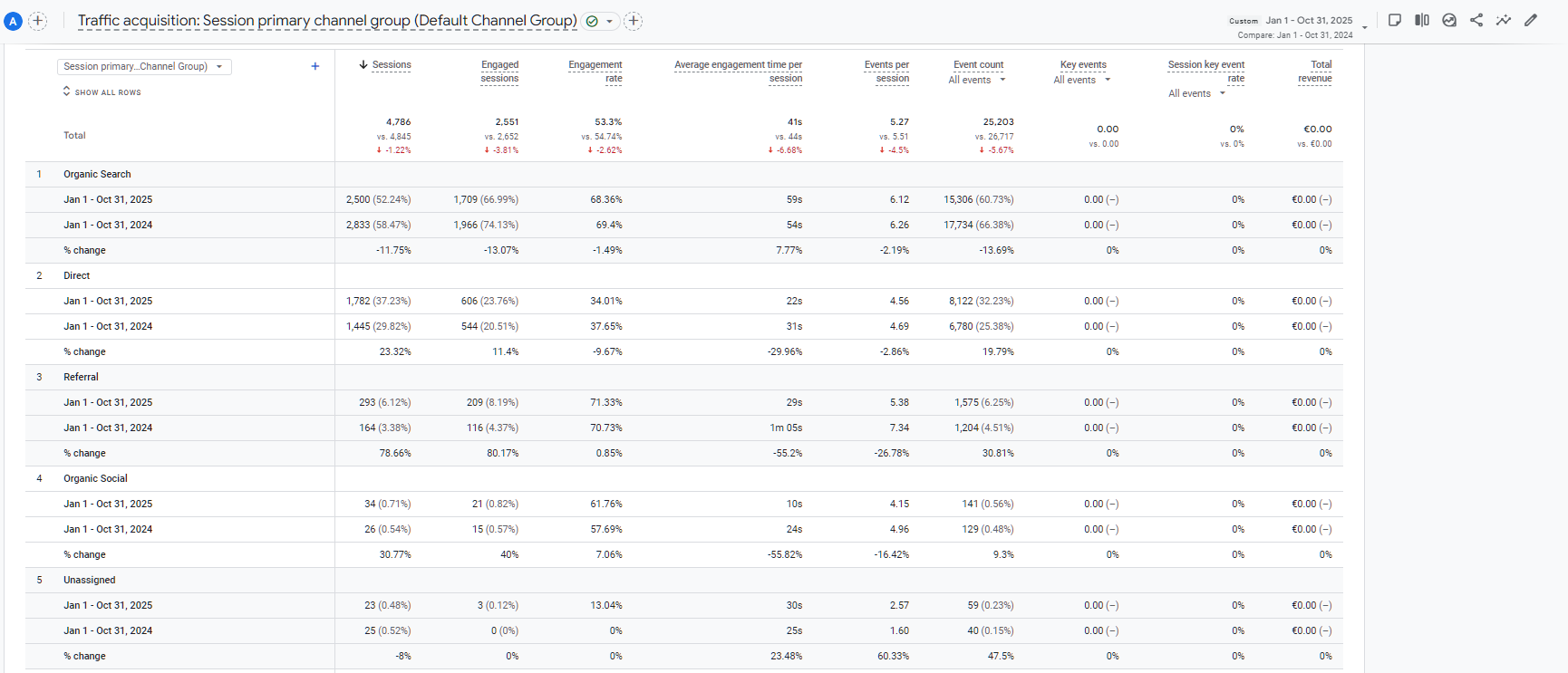
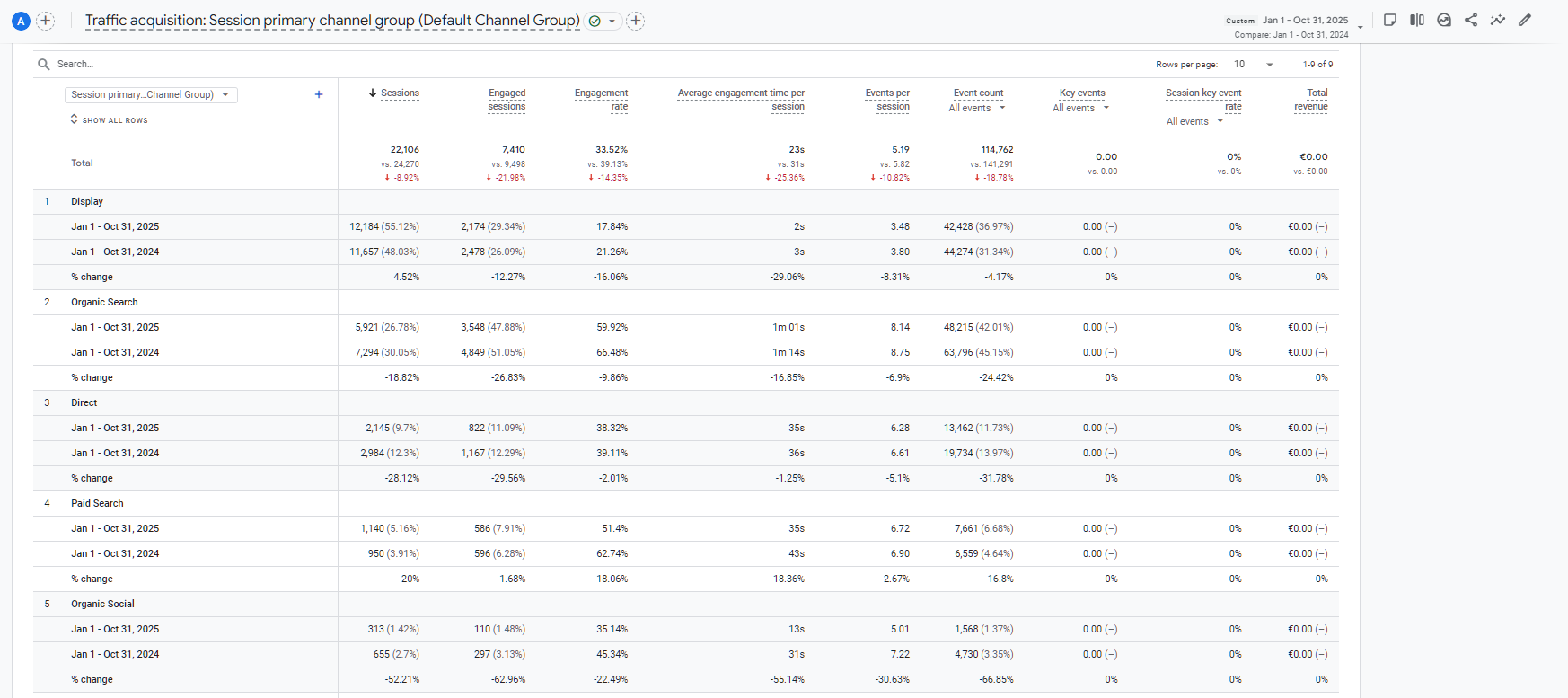
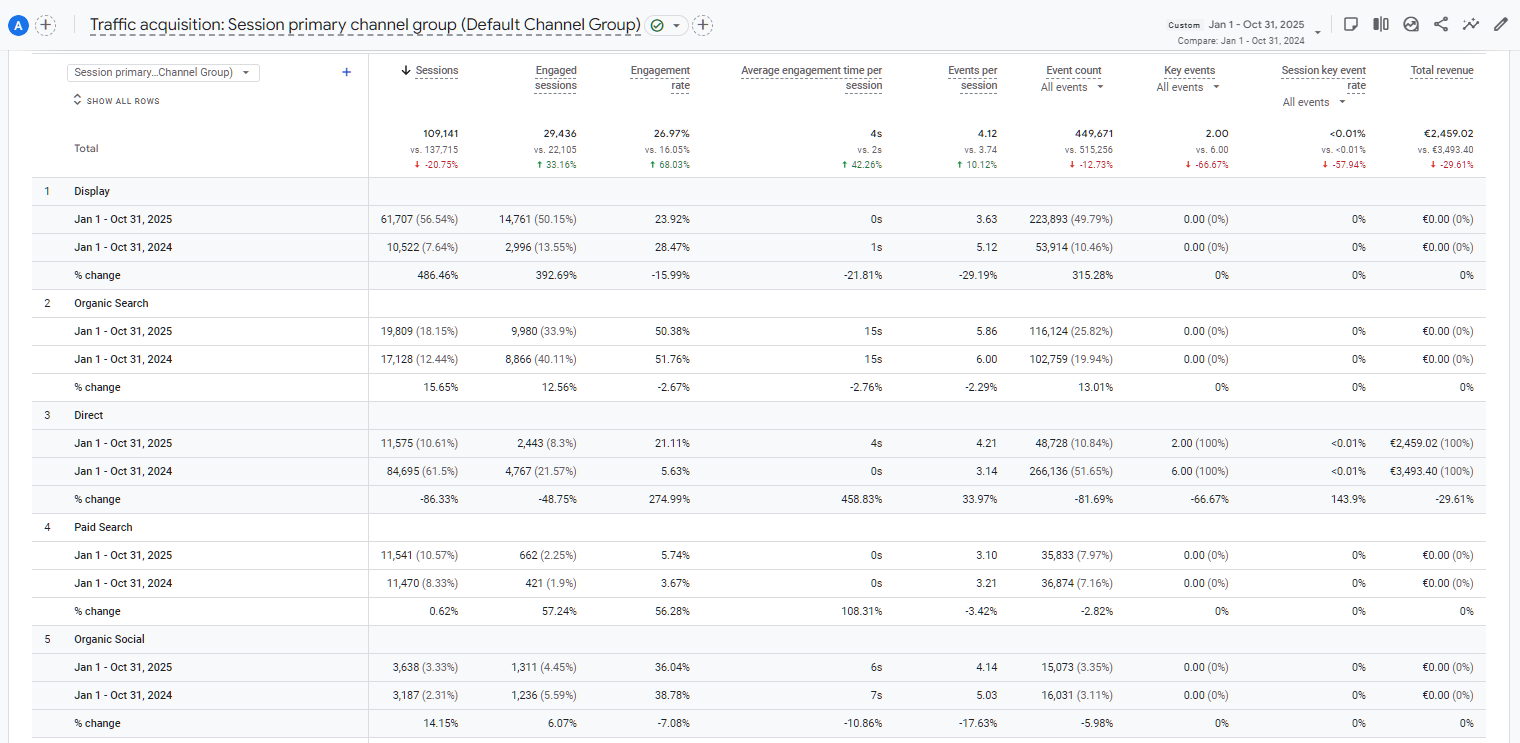
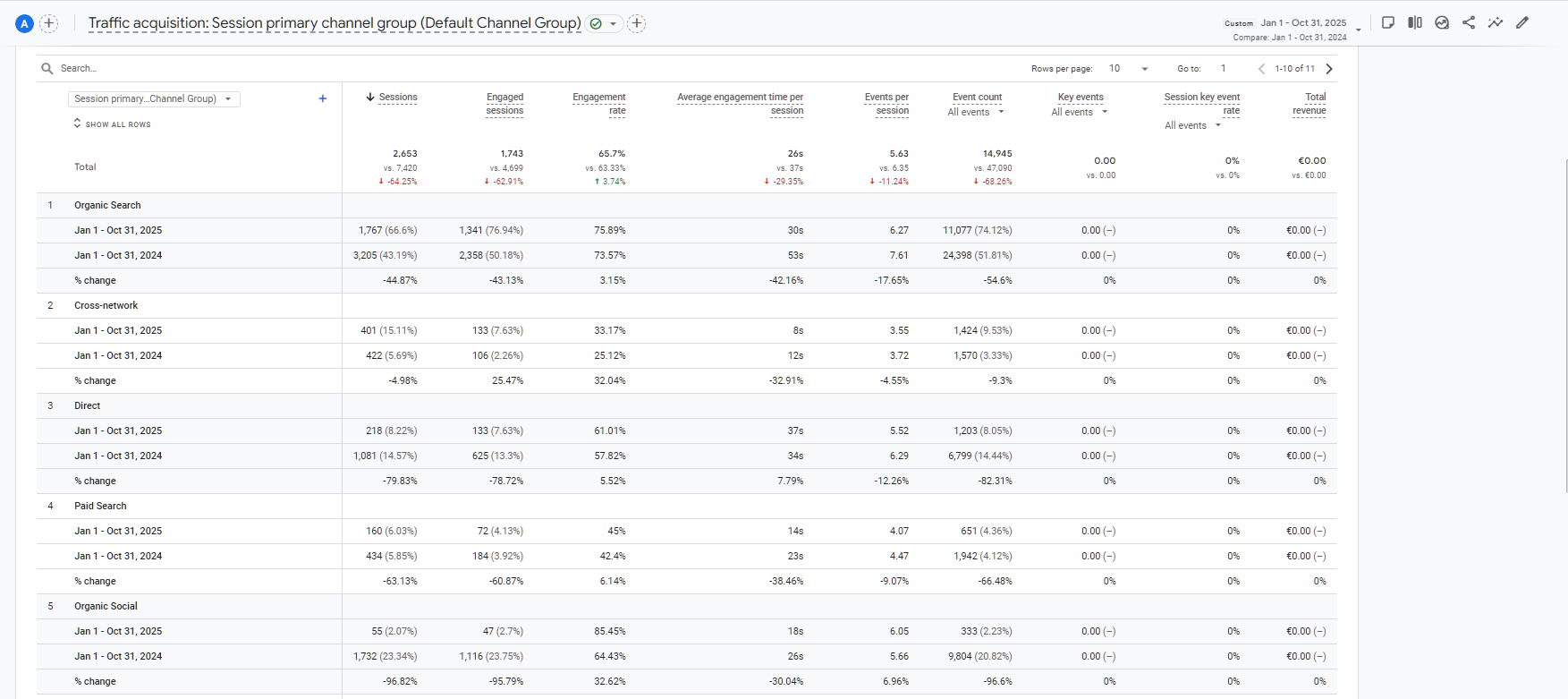
Since we don’t like reasoning by impressions, we took 10 randomly chosen clients, small and large, and analyzed the period January–October 2025 vs the same period in 2024.
No names (for obvious reasons), but the data yes — below you’ll find all the screenshots: the trends are clear, and above all very different from what you hear around.
📊 Traffic volumes: from lowest to highest
-
Largest client: ~109,000 sessions (down vs 2024, but still the highest volume).
-
Smallest client: ~600 total annual sessions.
The sample is deliberately heterogeneous: micro sites, mid-size brands, structured organizations.
🔎 SEO: 50% grows, 50% declines
The “SEO is collapsing” narrative simply doesn’t hold up against the numbers.
📈 SEO growing (5 out of 10)
-
Client 3: +34%
-
Client 4: +13%
-
Client 5: +394% (!!)
-
Client 9: +18%
-
Client 10: +16%
📉 SEO declining (5 out of 10)
-
Client 1: –10%
-
Client 2: –23%
-
Client 6: –12%
-
Client 7: –19%
-
Client 8: –2/3%
👉 Conclusion: SEO is not dead, but it’s increasingly selective.
Those who work seriously on content, structure, UX and links grow;
those who sit back or lived only on organic tend to lose ground.
📱 Social: the most “explosive” channel of 2025
Here the trend is much clearer.
🚀 Social growing (7 out of 10)
With often staggering increases:
-
from +30% up to +2,534% on Organic Social
-
Paid Social that in some cases start from zero and bring over 1,200 new sessions
📉 Social declining (3 out of 10)
Usually correlated to:
-
total absence of activity
-
lack of Paid Social
-
sporadic or no posting
👉 Conclusion: in 2025 social – especially paid – is a very powerful traffic driver.
🔀 Multichannel vs single-channel: here’s who really grows
This is the most interesting part of the whole analysis.
🌈 The multichannel clients (SEO + Social + Ads + Referral)
They are the ones with the best results.
Examples:
-
Client 3 → almost all channels growing: total traffic strongly up
-
Client 4 → Social boom + SEO growing: +50% total
-
Client 5 → SEO exploding + social/referral up: +84% total
-
Client 9 → SEO + Paid Search + Referral: +18% total
-
Client 10 → super multichannel, held back only by an anomalous Direct drop (likely a technical/tracking issue)
🎯 Single-channel or “intermittent” activity
Here the numbers go down.
-
Almost total dependence on SEO
-
No social/ads investment
-
Rare posting
-
No recent optimization
Result: drops between –1% and –48% depending on the case.
👉 Conclusion: multichannel is no longer a choice:
it’s what determines resilience, stability and growth.
🧠 AI and SEO: what does the data really say?
The phrase “AI killed SEO” is contradicted by the sample itself:
-
5 sites growing
-
5 sites declining
If it were a global and inevitable phenomenon, we would see 10 out of 10 in the negative.
Instead, what emerges is much simpler (but often ignored):
✔ Those who keep publishing, optimizing, updating… grow
✖ Those who stop, don’t diversify and rely on a single channel… decline
No catastrophist theories needed.
Strategy and constant work are needed.
🧾 Our final summary
🟢 SEO: more alive than ever
50% growing, 50% declining.
Those who invest seriously go strong, those who don’t lose ground.
🟣 Social: the real engine of 2025
7 out of 10 clients grow, often enormously.
🔵 Multichannel = resilience
Clients with SEO + Social + Ads + Referral are the ones that best resist algorithm changes, competition and AI.
🔴 Dependence on a single channel = risk
Especially if the only channel is SEO and nothing has been published for months.
🤝 An analysis useful for us, and hopefully for you too
This snapshot of 10 randomly chosen projects confirmed what we see every day:
There are no “magic” strategies, only ecosystems of channels working together.
Those who invest in a balanced way grow.
Those who stop… stay still (or go down).
If you want to dig deeper, compare your project or understand how to distribute investments across the various channels, we’re here.